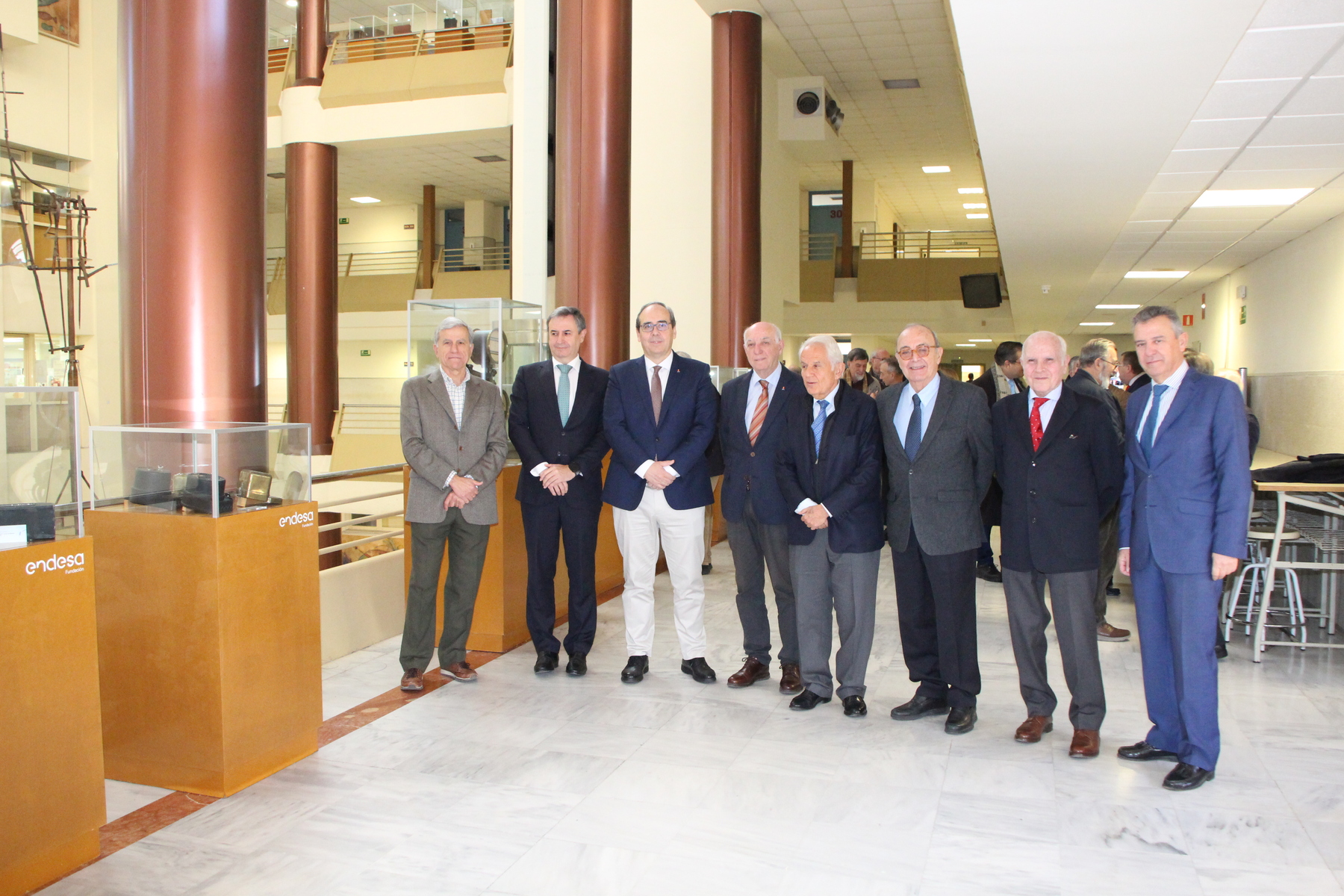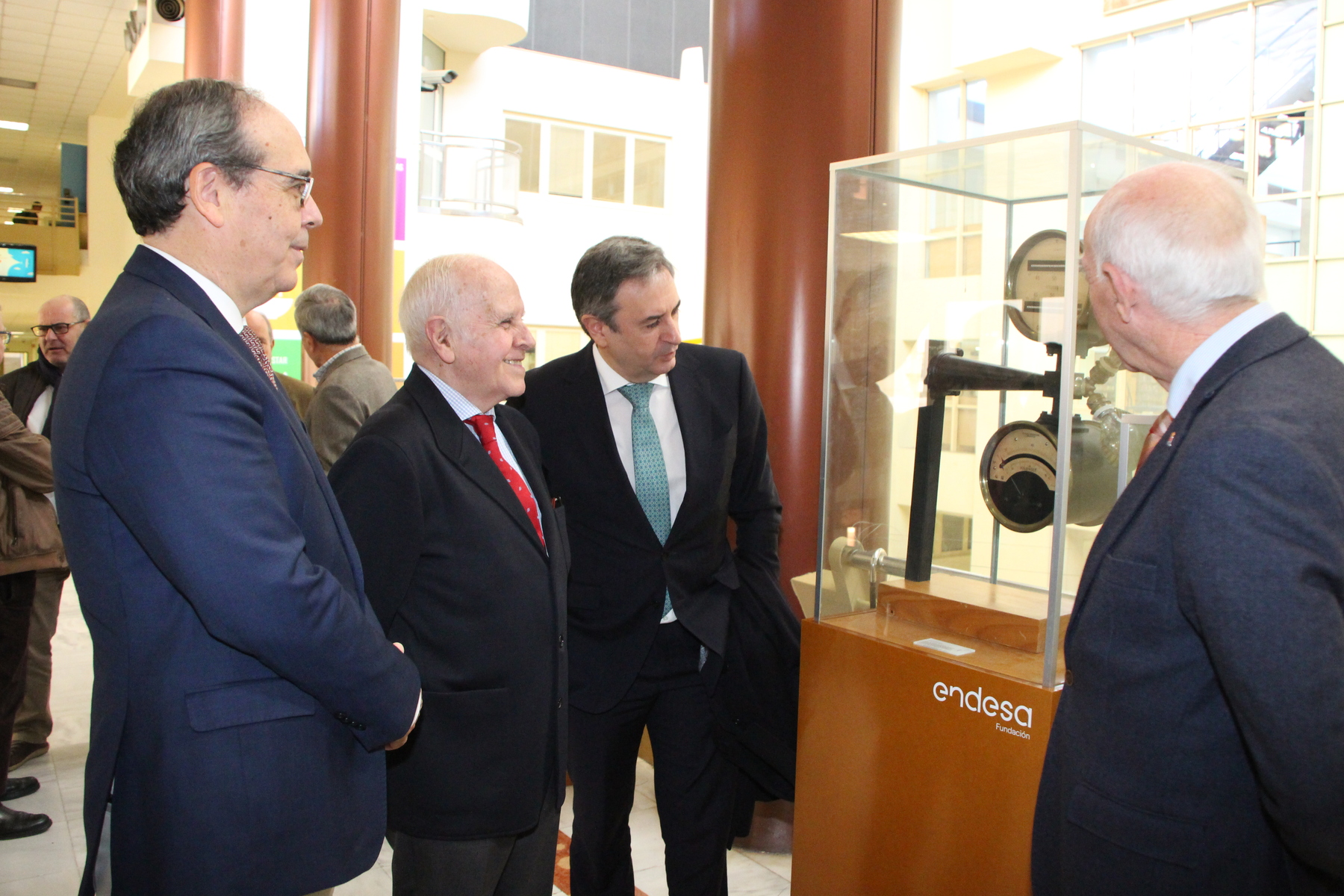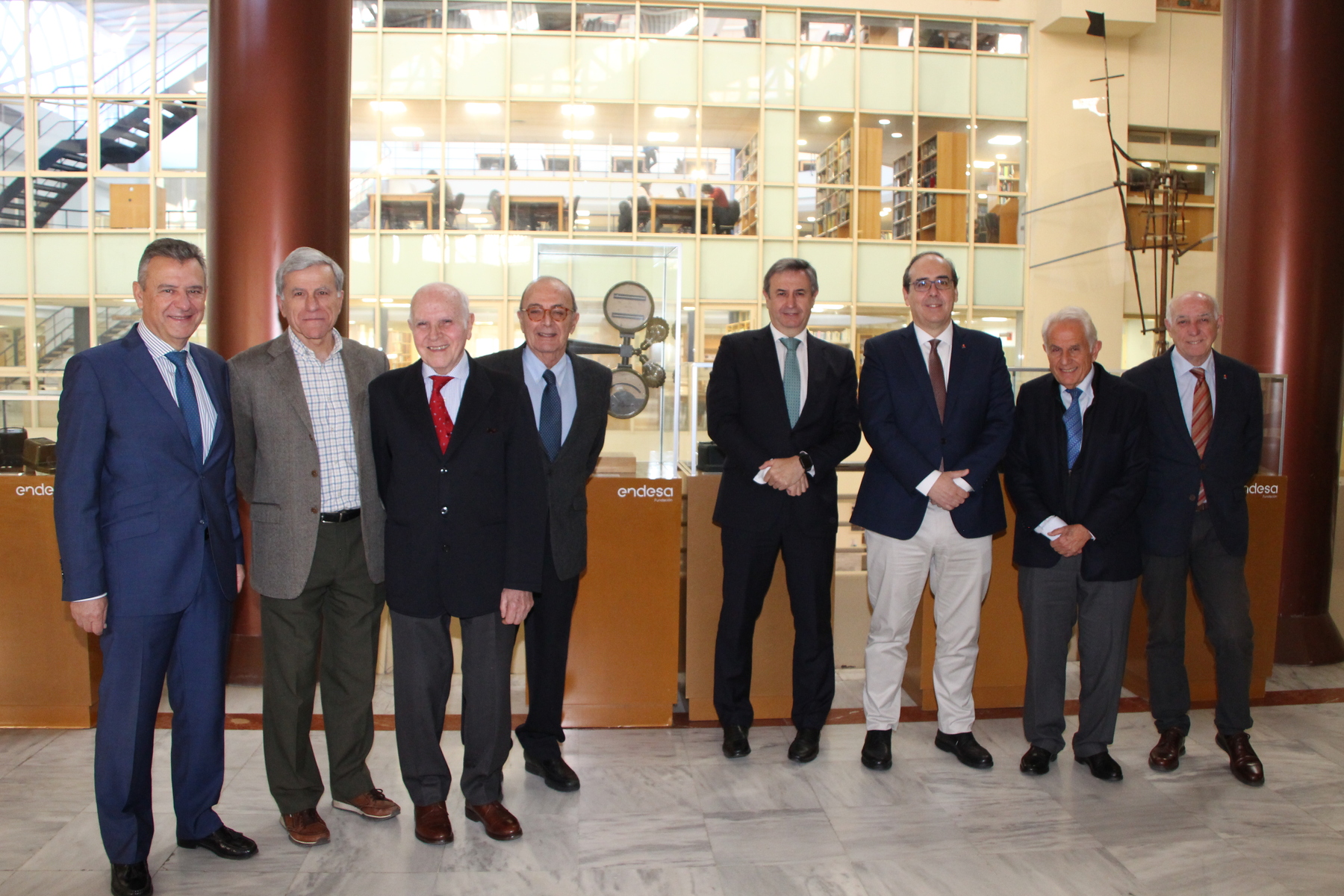
The exhibition 'Electrical Treasures. The Evolution of Energy in Andalusia' has been inaugurated
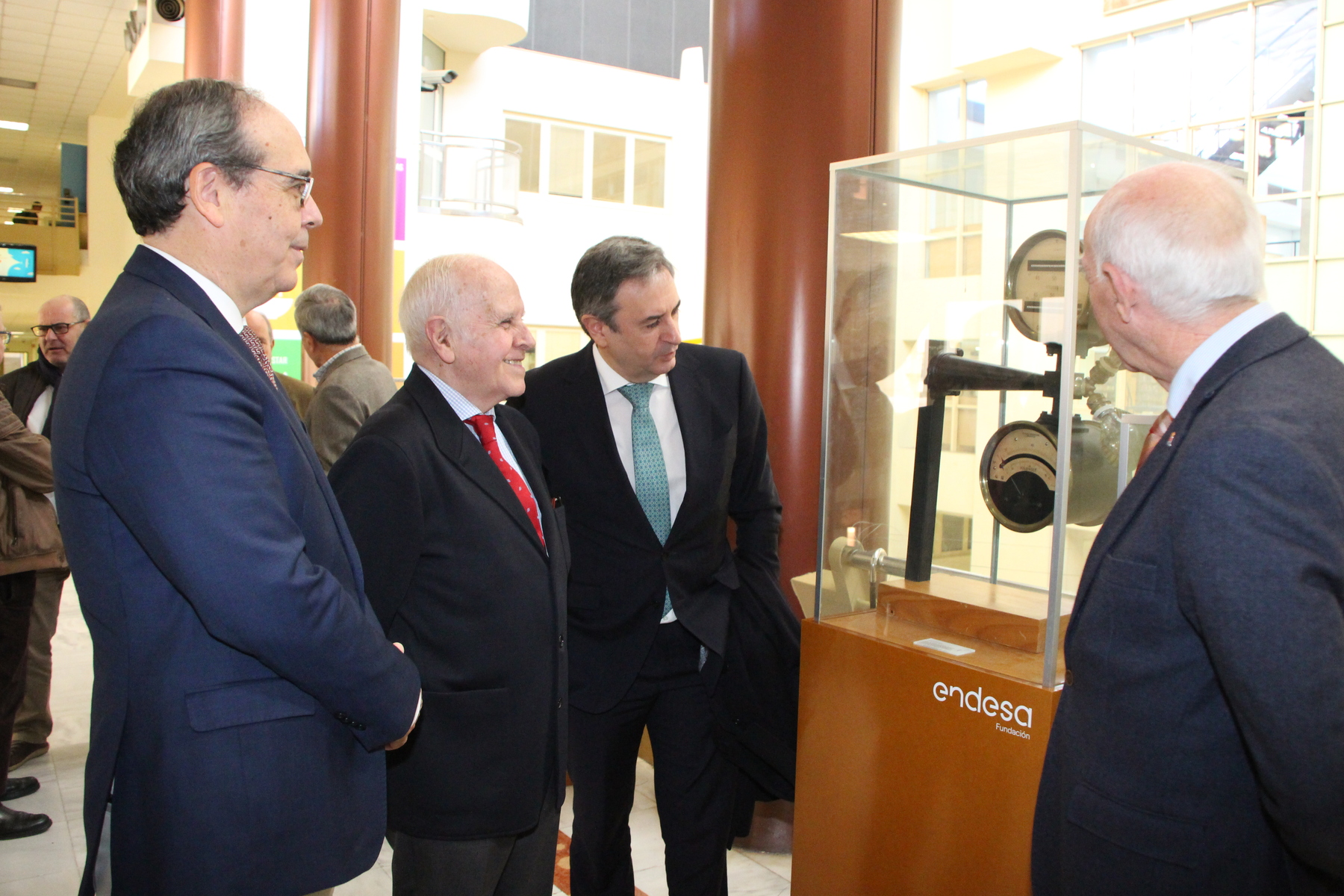
The Endesa Foundation has inaugurated the exhibition 'Electrical Treasures: The Evolution of Energy in Andalusia'which features a collection of historical pieces whose objective is to highlight the technological evolution in the electrical sector over the last 100 years.
The opening ceremony, which took place today in the The Higher Technical School of Engineering of the University of Seville (ETSi) was attended by Andrés Sáenz Pérez, director of the ETSi, Ramón Abella Monserrat, professor of the Department of Aerospace Engineering and Fluid Mechanics of the ETSi, Francisco Rodríguez Rubio, professor and former director of the ETSi, Rafael Sánchez Durán, director of Endesa in Andalusia, Extremadura, Ceuta and Melilla, Antonio Pascual Acosta, trustee of the Endesa Foundation, and Marta Tobías Núñez, head of projects of the Endesa Foundation in Andalusia.
This collection, provided by the Endesa Historical Fund, managed by its foundation, consists of apparatus, devices and components corresponding to generation and distribution activities that illustrate the progress of the electricity industry, the different uses of electricity and the evolution of technological transfers as Endesa acquired the latest advances.
The exhibition space, located on the first floor of the ETSI (School of Industrial Engineering), provides the educational community with access to a collection of high cultural and educational value that contributes to the training of future professionals. A concrete example of this value is the Final Degree Project in Industrial Technology Engineering by student Marta Elena Garrido-Lestache, which consisted of identifying and cataloging the 183 pieces of equipment from the Endesa Historical Collection, originating from the companies that electrified, among other areas, the south of Spain.
This classification of the elements has been carried out following application and use criteria, since all of them fulfilled, when they were working, various functions such as protection, measurement, lighting or even telephony.